Supported Independent Living (SIL) accommodation is evolving rapidly with the help of modern technology. These advancements are transforming the way support is delivered, making services more efficient, personalised, and safer for participants. From digital care systems to smart home devices, technology is playing a vital role in improving quality of life and independence for people with mobility issues.
In regions like Toowoomba, services such as NDIS SIL accommodation in Toowoomba and NDIS accommodation providers in Toowoomba are increasingly integrating technology into daily care practices to enhance support and improve outcomes for participants.
Smart Home Technology for Greater Independence
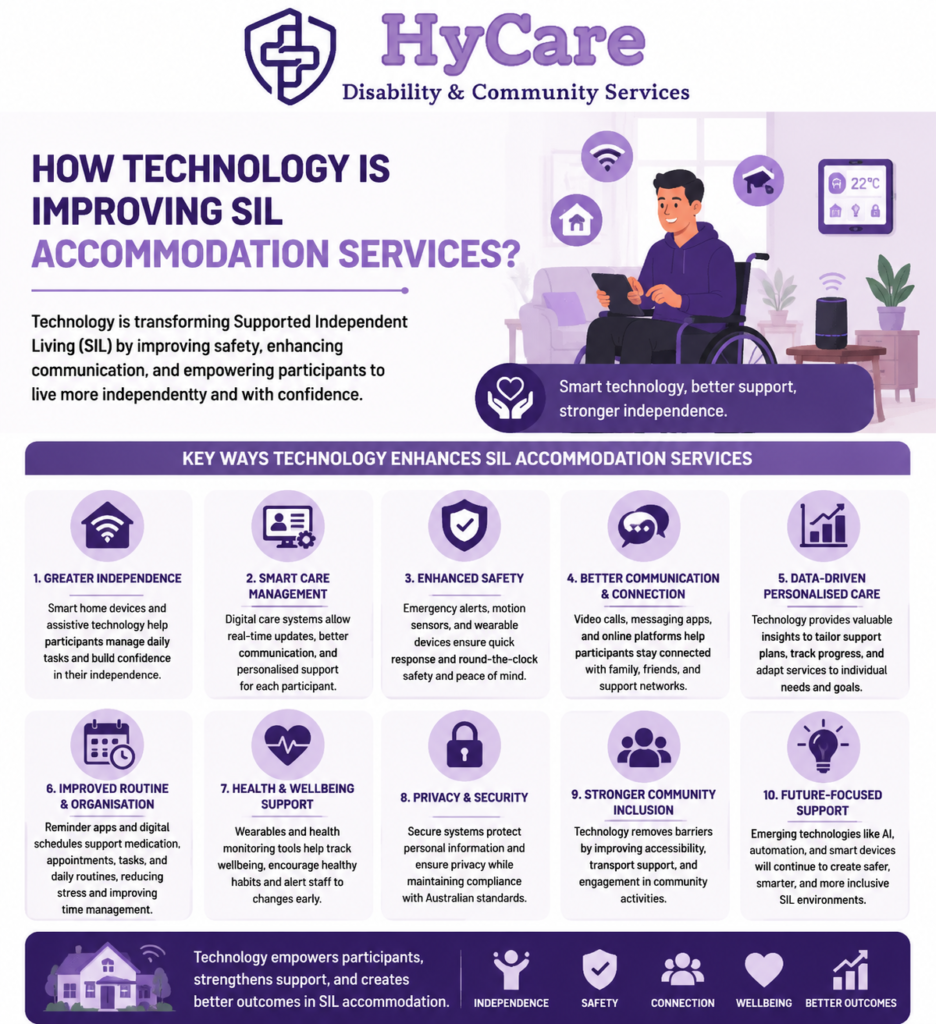
One of the most significant improvements in SIL accommodation is the use of smart home technology. Devices such as automated lighting, voice-activated assistants, and smart appliances help residents perform daily tasks with greater independence.
These tools allow individuals to control their environment more easily, reducing reliance on constant physical assistance. This promotes confidence and helps participants develop essential life skills in a safe and supportive setting.
Digital Care Management Systems
Technology has also improved how support workers and providers manage care. Digital care management systems allow staff to record, track, and update participant information in real time. This ensures that care plans are accurate, up to date, and tailored to individual needs.
For NDIS SIL Accommodation in Toowoomba, these systems improve communication between staff, families, and healthcare professionals, ensuring everyone involved has access to the same important information.
Improved Safety and Monitoring Tools
Safety is a key priority in SIL accommodation, and technology has significantly enhanced monitoring systems. Features such as emergency alert systems, wearable devices, and motion sensors help ensure residents are safe at all times.
These technologies allow support workers to respond quickly in case of emergencies, reducing risks and improving overall peace of mind for both participants and their families.
Enhanced Communication and Social Connection
Technology also helps residents stay connected with family, friends, and support networks. Video calling apps, messaging platforms, and online community programs make it easier for individuals to maintain relationships and reduce social isolation.
For many participants supported by NDIS accommodation providers in Toowoomba, these communication tools play an essential role in building emotional wellbeing and social engagement.
Personalised Support Through Data Insights
Modern technology allows providers to collect and analyse data to better understand participant needs. This information helps create more personalised care plans that adapt to changing circumstances. By using data-driven insights, SIL providers can identify patterns, monitor progress, and adjust support strategies to ensure better outcomes for individuals.
Technology is transforming SIL accommodation services by improving safety, independence, communication, and personalised care. These advancements allow participants to live more independently while receiving the right level of support when needed. As technology continues to evolve, SIL services will become even more efficient and responsive to individual needs, creating better living environments for people with mobility issues.
Connect With Us Today
If you are looking for trusted and innovative support services, HyCare provides high-quality NDIS SIL accommodation in Toowoomba and reliable NDIS Accommodation Providers in Toowoomba. Contact HyCare today to learn more about modern, person-centred SIL accommodation solutions designed to support independence and wellbeing.
Call us at 1300 492 273 or email us at admin@hycareservices.com.au for more information.
FAQs On SIL
- How does technology improve independence in SIL accommodation?Technology such as smart home devices, voice assistants, and automated systems enables participants to complete daily tasks more independently while reducing reliance on constant support.
- What types of technology are commonly used in SIL accommodation?Common technologies include smart lighting, automated doors, medication reminders, emergency call systems, wearable health devices, and digital care management platforms.
- How do digital care management systems benefit participants?These systems allow support workers to record and update care plans in real time, ensuring participants receive personalised, accurate, and consistent support.
- Can technology improve safety in SIL accommodation?Yes. Emergency alert systems, motion sensors, smart monitoring devices, and wearable technology help improve safety by enabling faster responses during emergencies.
- How does technology help participants communicate with family and friends?Video calling, messaging apps, and online communication platforms make it easier for participants to stay connected with loved ones, reducing social isolation and promoting emotional wellbeing.
- Does technology replace support workers in SIL accommodation?No. Technology is designed to complement the work of support workers by improving efficiency, enhancing communication, and providing additional tools that support participant independence.
- How does technology support personalised care?Digital tools collect important information about participant needs, goals, and progress, allowing providers to tailor support plans and adjust services as needs change.
- Is personal information kept secure when using digital systems?Yes. Reputable SIL providers use secure digital platforms that comply with Australian privacy and data protection requirements to safeguard participant information.
- Can technology help participants develop daily living skills?Absolutely. Smart devices and assistive technology encourage participants to practise tasks such as cooking, scheduling, medication management, budgeting, and household routines independently.
- What is the future of technology in SIL accommodation?Emerging technologies such as artificial intelligence, remote monitoring, smart assistive devices, and advanced accessibility solutions are expected to further improve safety, independence, and quality of life for SIL participants.