A brain injury rarely arrives with warning. One ordinary afternoon becomes a hospital corridor, a diagnosis, and a future that looks nothing like the one that was planned. For adults living with an acquired brain injury, the road back to independence is rarely straight. It bends through therapy rooms, family living rooms, and quiet moments of frustration when a task that once felt automatic suddenly feels impossible. This is where a trusted NDIS service provider in Toowoomba becomes more than a name on a plan. It becomes the steady hand that helps someone relearn how to live on their own terms.
The Long Road After Injury
Recovery from an acquired brain injury is rarely a single event. It is a slow unfolding, some days marked by small wins like remembering a name or finishing a meal unaided, other days shadowed by fatigue, confusion or emotional swings that seem to come from nowhere. Family members often step in first, offering love but not always the clinical structure that recovery demands. Over time, many households realise that sustainable support requires more than good intentions. It requires trained hands, consistent routines and a plan built around the individual, not a generic template.
This is precisely why families across regional Queensland increasingly seek acquired brain injury support services Toowoomba residents can rely on without long wait times or constant staff turnover. Local support means someone who understands the community, the distances between appointments and the rhythm of everyday life in the region.
Why Local Knowledge Changes Everything
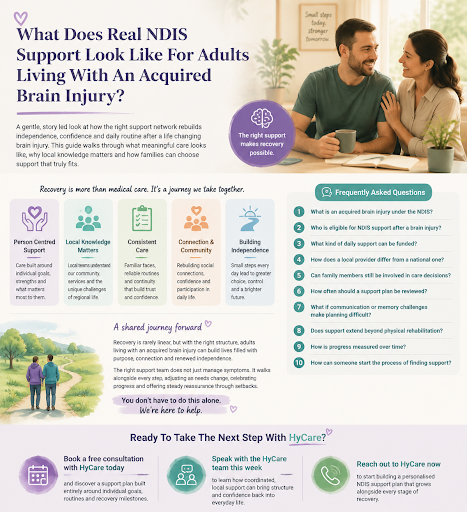
Support delivered by someone unfamiliar with a region can feel transactional. Support delivered by a team embedded in the community feels different. It understands which allied health clinics are nearby, which transport routes work best for someone with fatigue or mobility challenges, and how to coordinate therapy without exhausting the person at the centre of the plan. Choosing professional NDIS acquired brain injury support Toowoomba, families already trust often comes down to this sense of familiarity. It is not just about ticking boxes on a support plan. It is about showing up consistently, understanding triggers, and adjusting care as recovery evolves.
Reach out to HyCare now to start building a personalised NDIS support plan that grows alongside every stage of recovery.
Building A Plan Around The Person, Not The Diagnosis
Every acquired brain injury tells a different story. Some individuals struggle with memory, others with speech, mobility, or emotional regulation. A single template can never capture this complexity. Good support begins with listening, mapping daily challenges, and slowly building routines that restore a sense of control. This might include help with morning routines, supported community access, cognitive rehabilitation exercises, or simply having someone present who understands the unpredictability of a bad day. Over months, these small consistent supports often add up to something larger, a rebuilt sense of identity beyond the injury itself.
Skilled coordination also matters here. An experienced NDIS service provider does not simply deliver hours of care. It connects allied health professionals, coordinates with occupational therapists, and ensures every support worker understands the person’s history, preferences and goals. This continuity reduces the emotional toll of repeating the same story to unfamiliar faces again and again.
Community, Connection And The Quiet Power Of Routine
Isolation is one of the most underestimated challenges after a brain injury. Friendships can fade when communication becomes difficult, and confidence can erode when once familiar tasks now require assistance. Thoughtful support services rebuild more than physical skills. They rebuild social connection, encouraging participation in community groups, shared outings and gentle re engagement with hobbies once loved. This human centred approach, paired with acquired brain injury support services Toowoomba families can access locally, often becomes the turning point where recovery starts to feel less like a burden and more like a shared journey forward.
Looking Ahead With Confidence
Recovery is rarely linear, but with the right structure, adults living with an acquired brain injury can build lives filled with purpose, connection and renewed independence. The right support team does not just manage symptoms. It walks alongside every step, adjusting as needs change, celebrating progress and offering steady reassurance through setbacks.
Speak with the HyCare team this week to learn how coordinated, local support can bring structure and confidence back into everyday life.
Ready To Take The Next Step With HyCare?
Book a free consultation with HyCare today and discover a support plan built entirely around individual goals, routines and recovery milestones.
FAQ's About NDIS Support for Adults With Acquired Brain Injury
- What is an acquired brain injury under the NDIS?An acquired brain injury refers to any damage to the brain occurring after birth, often caused by accidents, stroke, infection or lack of oxygen, and the NDIS recognises it as a condition that may qualify for long term support funding.
- Who is eligible for NDIS support after a brain injury?Eligibility generally depends on the permanence and functional impact of the injury, assessed through medical documentation and everyday functional challenges rather than the diagnosis label alone.
- What kind of daily support can be funded?Funded supports may include personal care, community access, transport assistance, cognitive rehabilitation activities and coordination between allied health professionals.
- How does a local provider differ from a national one?A local provider typically understands regional transport routes, community resources and clinic availability, allowing for more consistent and personalised scheduling.
- Can family members still be involved in care decisions?Yes, family involvement is encouraged and most support plans are built collaboratively with input from both the individual and their support network.
- How often should a support plan be reviewed?Most plans benefit from review every six to twelve months, though changes in health, goals or living situation may prompt earlier adjustments.
- What if communication or memory challenges make planning difficult?Experienced support workers use structured, patient communication methods and visual aids to ensure goals and preferences are properly understood and respected.
- Does support extend beyond physical rehabilitation?Yes, emotional wellbeing, social participation and psychological support are equally important parts of a well rounded recovery plan.
- How is progress measured over time?Progress is often tracked through functional goals such as independence in daily tasks, improved communication, and increased community participation rather than clinical scores alone.
- How can someone start the process of finding support?The process usually begins with a conversation about current challenges and goals, followed by connecting with a provider who can help navigate plan funding and service options.